Anyone who has tried to book a truck for a shipment knows the routine. You make a few calls, wait for quotes, and hope the driver who turns up is the one you were promised. Pricing is unclear, and once the goods are on the road, you mostly wait for a phone call.
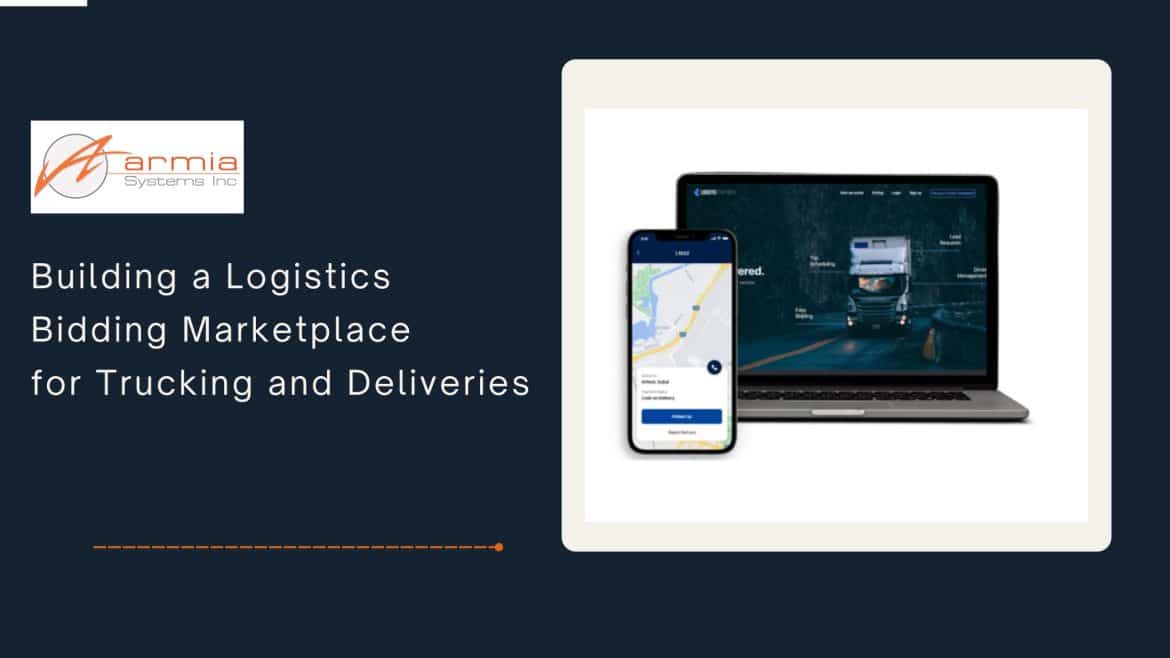
Logistic Partners was built to take that guesswork out of the process. It’s a logistics marketplace, available on web and mobile, that connects customers with verified trucking companies. This post covers how it works and the thinking behind it. You can also see the full project on our Logistic Partners portfolio page.
The problem with booking transport the old way
Moving goods is rarely the hard part. The hard part is everything around it: finding a reliable provider, comparing prices that aren’t presented the same way, and trusting that a driver you’ve never met will show up and do the job properly.
For a business that ships often, this takes up a lot of time. For someone shipping once, it can feel like guessing. In both cases, the customer usually has little visibility once the delivery begins. We wanted to build a system that dealt with all of these points together instead of fixing just one.
The idea: let drivers compete, let customers decide
The platform runs on bidding. A customer creates a consignment request by entering the pickup and drop-off locations and shipment details. Verified drivers and trucking companies then submit their bids.
The customer sees every offer side by side and chooses based on price, driver ratings and reviews. Nobody is steered toward a provider, so the person sending the goods stays in control.
Bidding also helps keep prices fair without anyone having to negotiate. Providers know they’re competing, and customers can see what the market is offering for their particular job. Price isn’t the only factor, either. A slightly higher bid from a driver with strong reviews may be the better choice, and the platform gives customers what they need to make that call.
Built for different kinds of shippers
Logistic Partners serves individuals, small businesses, and larger enterprises. That mix shaped a lot of our decisions.
Picture someone sending a single consignment across the city. They want a quick, clear process with no logistics jargon. Now picture a business that arranges deliveries every week. They want something dependable and organized that they can come back to again and again.
The platform had to work for both, so we kept the core flow simple: add a consignment, review the bids, pick a partner, and follow the delivery.
Trust on the trucking side
A marketplace only works if customers can trust who’s on it, so much of the project focused on how providers join.
Trucking companies go through a structured on-boarding process, and licensed drivers operate under verified company profiles. That means customers aren’t choosing between anonymous accounts. Each driver is tied to a company, and each company has been through verification.
Companies also get a central dashboard to manage their drivers, vehicles, and delivery zones. Small fleet owners and larger operators can both track their work in one place, and the platform stays organized as more providers join.
Seeing the delivery, not just hoping for it
Once a driver is selected, the customer can track the delivery in real time. It sounds like a small feature, but it changes the experience. People worry less when they can see where the shipment is, and they spend less time chasing updates.
For providers, it works in their favor too. Transparent deliveries build the kind of reputation that earns good reviews, and good reviews help win future bids.
What’s inside the mobile app
The mobile app covers what people need from the first request to the final delivery:
- Simple consignment creation and management
- Real-time shipment tracking
- Secure payment integration
- Driver reviews and ratings
- Notifications
- Profile management
- Help and support
- Localization
- A way to send feedback
Each of these supports the same goal: keeping the customer informed and in control at every stage. Notifications keep people updated without constant checking, reviews help the next customer choose well, and the feedback option gives users a direct way to tell us what could be better.
The admin side
Behind the scenes, there’s an administrative layer that handles payment processing, driver verification, and overall platform management. It’s not the part customers see, but a marketplace needs it to run smoothly. Verification, in particular, only works if someone actively manages it, so building these tools in from the start mattered.
What we took from the project
Logistic Partners shows what we like to focus on when building a marketplace. The two sides need to trust each other, and the experience should be easy enough that people don’t think about the technology. Features like bidding, verification, and tracking all serve that goal.
It also reminded us that good marketplace design is about balance. Customers want choice and clarity, providers want fair access to work, and the platform has to keep both sides confident. Getting that balance right matters more than adding features.
Planning something similar?
If you’re planning a delivery platform, a freight marketplace, or any product that connects customers with service providers, we’d be glad to talk it through. Take a look at the project on our portfolio or explore our logistics solutions to see what we can build for you.