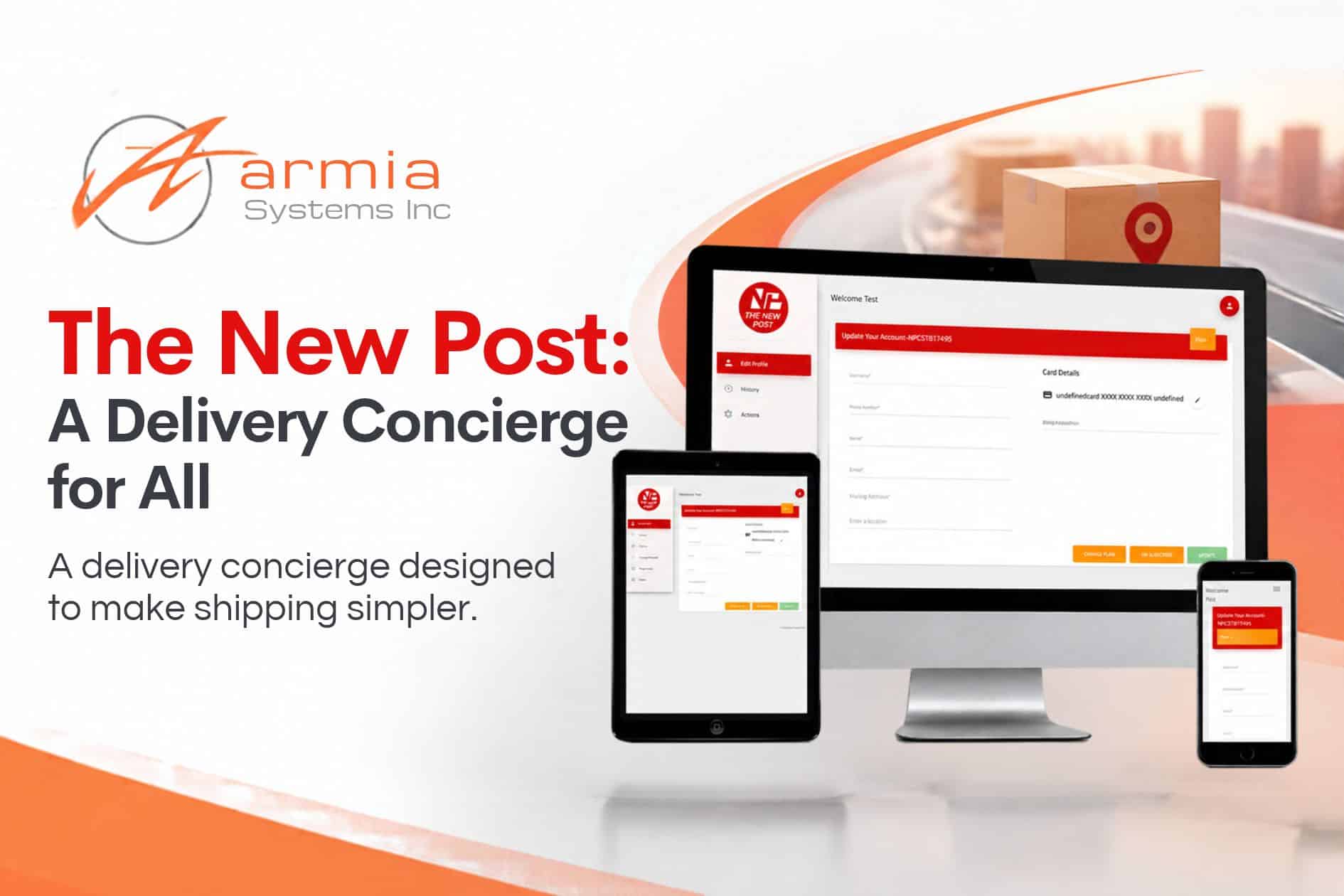
Anyone who shops online has missed a delivery at some point. The package arrives while you’re out, a card gets left on the door, and you spend the next few days arranging a re-delivery or a trip to a depot. It’s a small annoyance that happens constantly.
The New Post set out to fix that. It’s a Chicago-based logistics and delivery startup that works like a personal delivery concierge, and we built the platform behind it. This post walks through how it works for customers, how it works for retailers, and what holds it together. The full project is on our The New Post portfolio page.
Where The New Post came from
The New Post grew out of an established freight business. Its founder, an entrepreneur with a strong background in the freight industry, wanted to build a delivery service for consumers and businesses that felt more flexible, more secure and more focused on the user than traditional options.
The idea was to change how packages are handled, not just how they’re driven around. Instead of delivery happening on the carrier’s schedule, customers decide when and how their package arrives.
How it works for customers
A customer can have online purchases delivered straight to The New Post’s warehouse, where they’re stored safely. When the customer is ready, they either collect the package or schedule a delivery to wherever suits them.
That’s useful for anyone who’s often out, who doesn’t want parcels sitting on a doorstep, or who likes to receive several orders in one go. Through the customer platform, people can schedule pickups and deliveries, manage their shipments and track orders in one place.
Billing is flexible too. Customers can choose a monthly subscription plan, or pay as they go with a la carte services, depending on how often they use the service.
How it works for retailers
The New Post also serves businesses. Alongside the consumer platform, we built a separate retail partner platform for stores such as auto parts dealers, furniture stores and appliance retailers.
Partners can create and manage delivery requests in real time, and connect the system to their point-of-sale or inventory software so deliveries are scheduled directly from there. Customers can then see real-time delivery options at checkout.
For a retailer, the appeal is that it can offer on-demand delivery from its own location without building its own delivery operation. That’s a big deal for smaller businesses that want to compete on speed.
The engine in the middle: Bringg
Behind both sides of the platform sits the Bringg delivery management system, which acts as the main logistics engine. We integrated several Bringg APIs to keep driver apps, dispatch systems and customer notifications in sync.
In practice, that means deliveries can be tracked in real time, status updates go out automatically, and drivers, customers, retailers and warehouse staff stay coordinated without constant phone calls.
What happens inside the warehouse
The warehouse is central to this model, so the backend handles it carefully. It manages package intake, order handling, scheduling and billing, so a parcel is accounted for from the moment it arrives until it’s picked up or delivered.
The platform also includes an analytics dashboard, which gives the team a clearer view of how the service is running.
The technology
The platform is built with PHP and MySQL, running on Apache and Linux, and hosted on AWS. Payments run through Stripe, and single sign-on (SSO) is included for easier access.
Why this one stood out
What we like about The New Post is how it turns an everyday frustration into a service people can actually rely on. It also works for two very different groups, individual customers and retail partners, on a single platform. Getting both to work together took careful planning, and it’s the part of the project we think about most.
Let’s talk about yours
Planning a delivery service or a retail partner tool? Tell us what you need. You can also see more of this project on its portfolio page.
