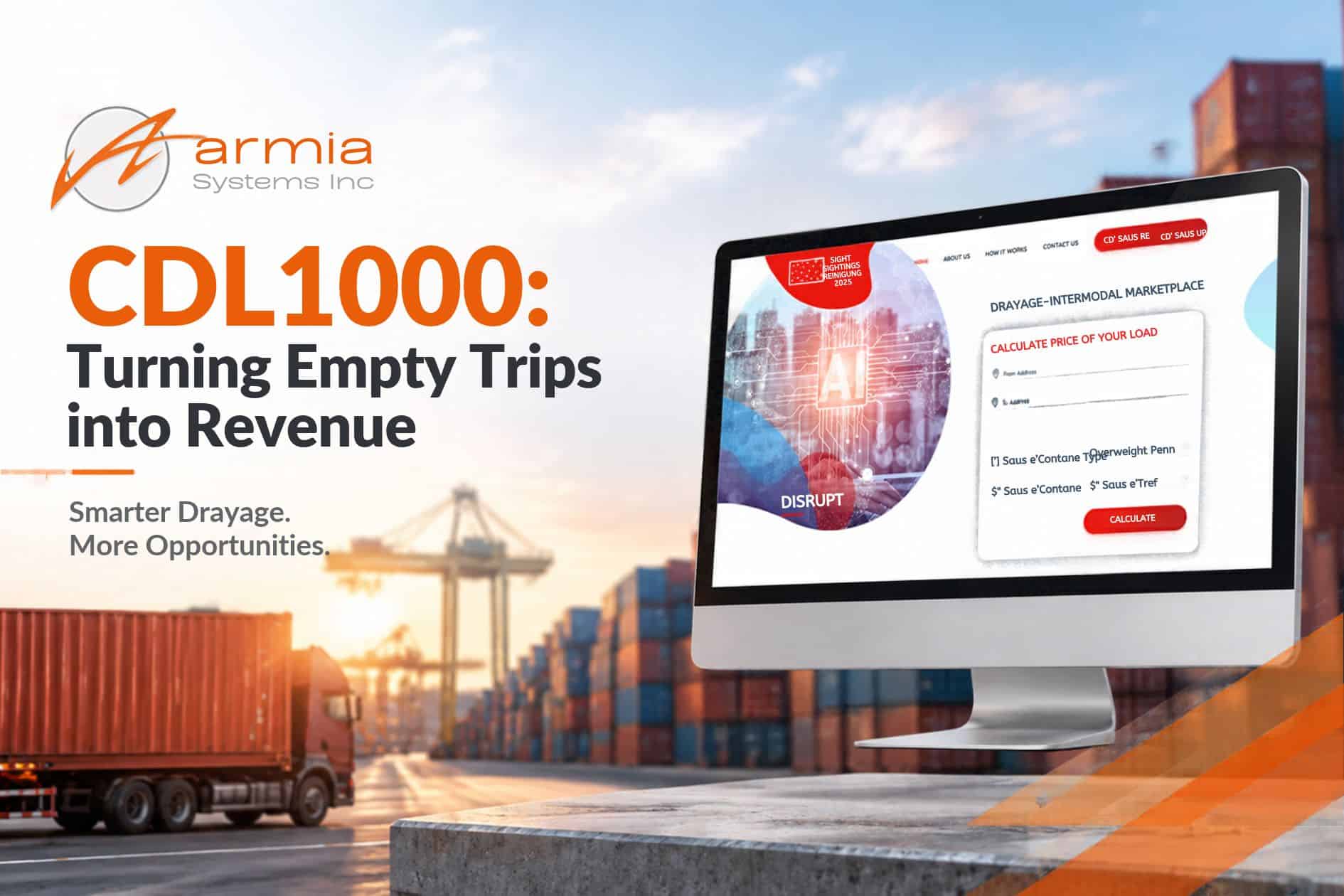
A truck delivers its load, and then it has to get home. Often it makes that trip empty, burning fuel and driver hours without earning anything. In trucking, those are called empty miles, and they’re one of the industry’s longest-running frustrations.
CDL1000 wanted to do something about them. They came to us with an idea for a smart logistics platform that matches back-haul trucks with loads, and we built it. This post explains what the platform does and where it’s heading. The full project is on our CDL1000 Smart Logistics Technology portfolio page.
First, what’s a back-haul?
A back-haul is the return trip of a commercial truck carrying freight back over all or part of the same route it took to get there. If the truck is carrying something on that leg, the trip pays for itself. If not, it’s an empty mile.
CDL1000 Inc is an asset-based third-party logistics company in Chicago, Illinois, running around 60 trucks on short-haul deliveries across the Midwest. With a fleet that size, empty return trips add up in wasted fuel and time, and in lost revenue.
The idea: a marketplace for spare truck capacity
The platform connects available back-haul capacity with shippers who have freight to move. It works from both sides:
- Carriers publish their upcoming routes
- Customers post their shipment loads
- The system lines up empty truck lanes with shipping demand
The result is a streamlined marketplace where a truck that would have gone home empty can pick up paid freight instead.
Who benefits
Carriers earn extra revenue from trips that used to earn nothing. Shippers get competitive back-haul pricing and a simpler way to arrange transport. The project page describes it as converting empty miles into revenue-generating miles, which sums it up well.
There’s a quieter benefit too. When more trucks run full, less fuel and fewer driver hours go to waste.
Starting with Chicagoland
The platform’s first phase focused on back-haul matching in the Chicagoland market. We liked the thinking behind that. A marketplace needs both carriers and loads in one place to work, so starting with a single area makes it easier to build a solid foundation before expanding.
CDL1000 plans to bring the platform to other markets across the United States later on.
What’s coming next
The platform was designed with growth in mind. Future phases will add two things:
- AI-powered load-to-truck matching, so the system can pair loads and trucks more intelligently
- Real-time vehicle tracking, powered by the iScripts LocoLogic system
Together, these should make the matching smarter and give everyone better visibility once a load is moving. Since they’re planned for later phases, they signal where the platform is going rather than something live today.
What it’s built with
The platform uses Angular JS and Node JS with a MongoDB database, hosted on AWS EC2, with the Google Maps API for location features. It also includes a cost calculator, load management, and a content management system.
A connection to CDL1000’s earlier project
This isn’t the first time we’ve worked with CDL1000. Their earlier platform, built for the drayage intermodal side of the business, includes an instant cost calculator and real-time tracking for container deliveries. You can read about it on our CDL1000 drayage project page. The two platforms address different parts of trucking, but both come from the same thinking: use technology to make the freight move work harder.
What we took from the project
The back-haul platform started with a very practical observation. A truck driving home empty is an unused resource. Once you see it that way, the solution is mostly about connecting the right people. That’s something marketplaces do well, and it’s why we enjoyed building this one.
Got an underused asset?
Empty trucks are one example. Idle warehouse space, spare equipment and unbooked capacity are others. If you have an idea for matching supply with demand, we’d like to hear about it. Contact our team, see how this one came together on the portfolio page, or browse our logistics solutions.
